How to select the right ski length
Skis are like people, they come in all shapes and sizes, and just like people, some may be right for you, whilst others may not. We're here to help you find a ski a perfect match by guiding you to select the right ski length that will make you shine like a star on that mountain.



When buying skis, which is an exciting experience in itself, it's not something you can just buy without any thought or knowledge behind it, especially when spending your hard-earned cash. Unfortunately, it's not always feasible to try before you buy, so a few key factors need to be considered to ensure your skis will be your best friend.
We're here to refine the overwhelming information out there, encouraging you to think about your ability and the type of skiing you like to do. This will dictate the length of skis, so then you can make a conscious choice to find your perfect match- a match made in heaven.

Perfecting the balance - skis and ski wear selection
In the quest for excellent performance on the slopes, the right skis are indispensable. However, they aren't the sole requirement. Complementary ski attire like ski wear women or men's ski wear plays an equally important role. We're here to demystify the process of finding skis apt for your skill level, preferred skiing style, and pairing them with the ideal wardrobe. Brace yourself for a harmonious skiing experience.
Ski types: Rocker vs camber
When deciding the length of ski, there seems to be a million and one things to consider, but one important factor that you need to think about is whether you want a rockered or cambered ski. Along with the length, the ski’s shape will determine how you perform. We understand that this may seem like a minefield, so before we begin on the length of a ski, a camber and rocker shape will be explained in simple terms.
A cambered ski is the original shape which revolutionised ski technology back in the 1800’s. The ski is arched under the foot, making the two key touchpoints to the snow being just behind the tip and just in front of the tail, and essentially the middle of the ski and the tips are elevated. This shape creates a natural cushion for impact, whilst improving the skiers turn initiation and stability. This is an ideal shape for hard, compact snow and groomed slopes, so usually piste skiis are a camber shape.
Whilst Camberered skis don’t fare too well in deep snow as the tips tend to sink, which is a recipe for disaster. So the new shape was developed, a rockered ski. Essentially the shape is the reverse of the camber (sometimes referred to as reverse camber), where the contact to the snow is under the foot and bindings and the two tips curve upwards. This helps with weight distribution for deep snow, so if you’re an avid off-piste and freerider, then a rocker shape will be the one. Whilst best off piste, on piste they also favour those who like speed and don’t bother with deep carving turns, with less need for precision. But if you’re looking for stability when at speed, the rocker isn’t your friend.

Choose a ski that suits your ability
Before going into camber and rocker shapes, you need to consider your ability. When choosing the right ski for you, you have to be honest with yourself and consider what level you are at. Have you skied before but know you can’t quite ace the carving technique confidently? Do you bomb down a red run but can’t quite tackle the steep un-pisted black runs? Are you ready to hit anything on the mountain, pisted, unpisted or however steep or icy? Your ability, confidence, level of technique will dictate what kind of ski length you should go for- selling yourself short could lead to skis holding you back, whilst being overly confident could lead to tips crossing and a nasty tumble with your skis still attached (we have all been there, don’t feel bad!)
Beginner
Beginners will need to go for a shorer length ski, because this is easier to control (plus easier to carry), so when you are trying to nail the parallel technique your skis will be less likely to cross at the front tip. The general rule is to go for a ski length 5 to 10cm under your height (around your nose height). These short skis are typically more forgiving when you fall and cause less injury if you take a fall. They also allow you to be more agile in your movements, so you will progress from pizza/ french fries to parallel in no time. Typically the shorter skis have a small rocker or a classic camber.
Intermediate
Intermediates are fairly similar to the length of beginner ski’s, however, you may feel more confident to go a little longer. You could try a ski which is more around eye height and you will feel the difference in those turns, allowing you to pick up the pace and get more on your edges for a smooth carve, but yet still easy to control.
Advanced
When you are starting to feel confident on those two planks, you may want to consider going for a longer ski. Anything from 5 cm below your height to even a few cm taller than you, will give you that feeling underfoot you will have been craving. You will feel more stable and powerful, giving you the ability to go faster and take on any kind of challenge. The longer the ski, the more surface area and a larger turning radius, so you can really pick up the pace and carve out the slope. By this point, you may want a ski that has a rocker to help with manoeuvring and feel like you’re floating.

Choose a ski that suits your discipline
Once you have established what ability you are, you also need to think about what type of skiing you spend most of your time doing. Piste skis are different to skis used for freeride or freestyle, so although you may have to go on pistes to get around the mountain and back home again, if you spend most of the day playing in the powder or on the kickers then, consider a different length.
Piste skis
Piste skis are typically shorter than any other kind of ski, as you don’t need that much surface area as would need for unpisted slopes. The slopes are groomed to be easier and smoother, so you can carve into turns with less effort. If you are a piste skier and spend most of your day up and down the allocated groomed slopes, then do not bother going for a long ski, it is more cumbersome and can make turning more difficult. The typical piste ski lengths are around the 5 to 10 cm below your height mark.
Freeride skis
For freeride skis, you need a ski that will perform best in deep powder and ungroomed slopes. You need more surface area to prevent you sinking into the powder and essentially allow you to float through the snow- heavenly! The recommended length for a freeride ski, would be your height plus 10cm (still taking your ability into account). The ski must be of a rocker shape, to allow for the two tips to be lifted out of the snow, to stop sinking headfirst and stop your edges from catching.
Freeride skis are also wider underfoot to provide more surface area, although this may seem like the ski would be heavy and a nightmare to carry around, they are in fact lighter than piste skis to help with the floating on powder.
Freestyle skis
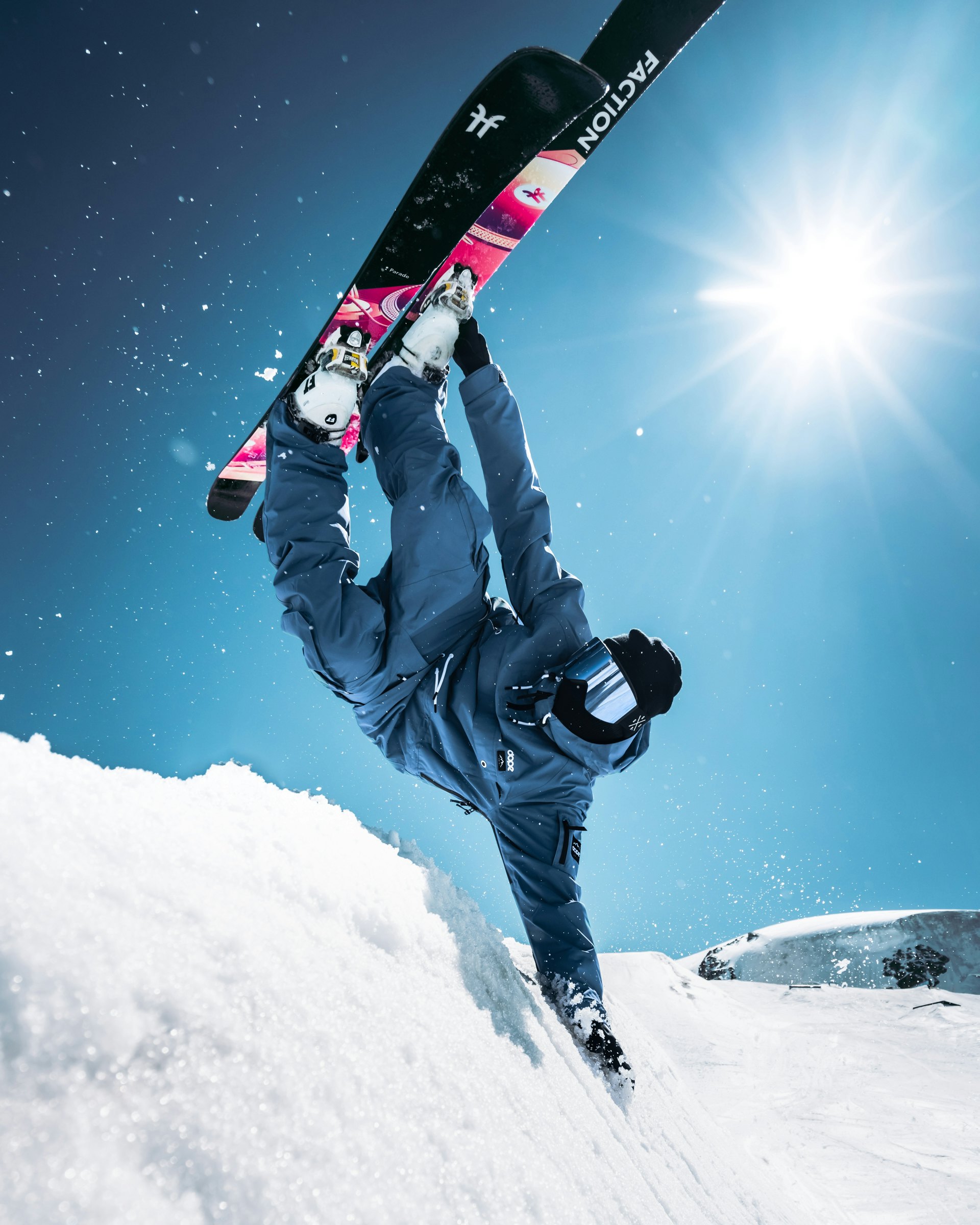
A freestyle ski needs to quick, agile and easy to manoeuvre to land those tricks perfectly, you want them to feel like an extension of your legs- one with the ski. For this, even though you may be an expert skier, you will want to consider a shorter ski. Go for something that’s more around 10 cm below your height to give you optimum control and stability. A lot of freestyle skis are twin tips, so you don’t catch your edges and are usually camber in shape, but recently more rocker styles have been developed. A shorter ski with camber, will allow you to land on the hard, compact snow and make quick, small manoeuvres on obstacles. Whilst slightly longer rocker skis, will allow you to jump further on kickers and hit natural kickers and jumps.

FAQs
How important is it to select the right length of ski?
Selecting the right length of ski is crucial for your safety and prevents injuries - and of course for enjoying the day on the slopes. The correct length can improve control, stability, and overall performance, whether you're navigating groomed slopes, off-piste terrain, or performing tricks freestyle.
Why is it important to match my ski length to the specific type of skiing I enjoy?
The type of skiing you prefer—piste, freeride, or freestyle—carries specific requirements for optimal performance. Piste skiing usually necessitates shorter skis for easy maneuverability on groomed slopes, while freeriding in powder conditions might call for longer and wider skis for better floatation. Freestyle skiing, demanding quick, agile movements for landing tricks, might require shorter, twin-tip skis for maximum control and versatility.
Wrapping up
So there you have it, hopefully, simple information that allows you to splash your cash on some skis, that you know will be perfect from the moment you clip in. Essentially, you just need to think about what ability you are at and what kind of skiing is your go to, and the right ski will be there waiting for you. Obviously, then considering whether you need camberered or rockered skis, but that is also subject to the type of skiing you do. One thing we do know for sure, is that choosing the right ski length will make the love story between you, the skis and the mountain deep, intense and thrilling.
Related Reading: